
What Does Mold on Miswak Look Like? Signs Your Stick Has Gone Bad

You pick up your miswak. The tip looks darker than yesterday. There’s a faint smell you can’t place.
Is it just well used? Or has it gone off?
A miswak is natural wood. Treat it right and it lasts for weeks. Leave it damp and sealed, and mould (mold, if you’re searching the American spelling) can move in fast.
Here’s how to tell the difference, and what to do about it.
Can Miswak Go Bad?
Yes. A miswak won’t “expire” on a set date like milk. But it can go bad in two ways.
It can grow mould. Wet wood plus no airflow is the perfect home for mould spores. This is the big one, and it means the stick goes straight in the bin.
It can dry out. Leave a stick too long and the wood turns hard and brittle. It won’t soften into bristles, and it can splinter against your gums.
The good news? Freshness holds up better than you might think. Lab tests found no difference in antibacterial effect between freshly cut and one month old miswak. Storage time does affect performance over the long run, though. So storage, not age, is usually what ruins a stick.
New to miswak? Start with what is a miswak stick.
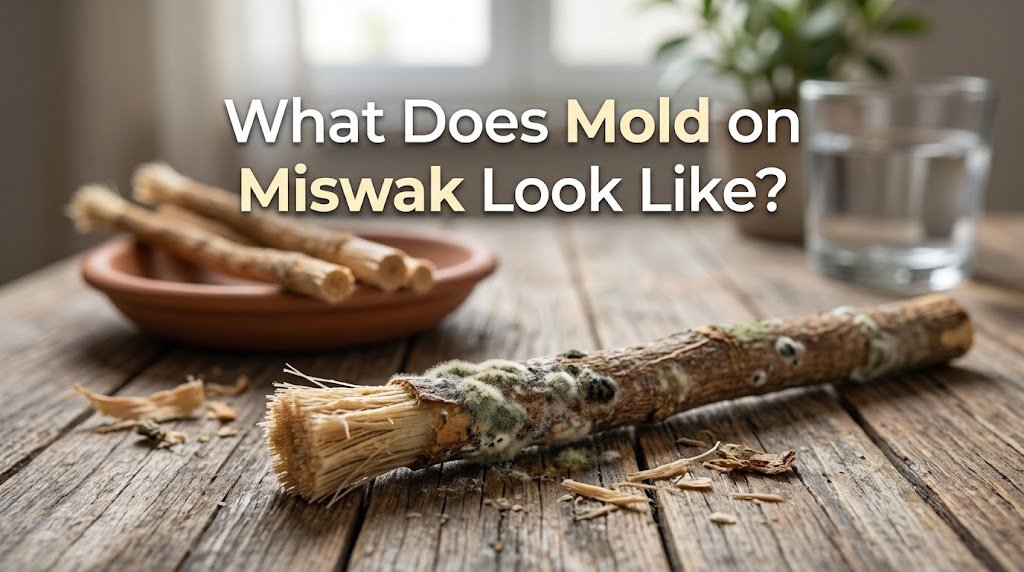
What Does Mold on Miswak Look Like?
Mould is usually easy to spot once you know what to look for. Check for:
- Fuzzy or furry patches. A soft, cotton like growth on the bark or bristles.
- Powdery spots. A dusty coating that smudges when touched.
- Colours that don’t belong. White, grey, green, blue or black spots on the wood.
- Spots spreading from the tip. Mould often starts where moisture sits longest.
- Slimy or soggy wood. Bristles or bark that feel wet and slick even after drying.
Look closely in good light. Mould can start small, as a few tiny specks near the bristles or where the bark meets the exposed wood.
Signs You Can Smell
Your nose often catches it before your eyes do. Bin the stick if it smells:
- Musty or damp, like a wet cellar
- Sour or rotten
- Unpleasant in any way it didn’t before
A fresh miswak has a mild, woody, slightly peppery scent. Anything else is a warning sign.
Signs You Can Taste
Fresh miswak tastes sharp and a little spicy. That’s its natural compounds at work. If it tastes sour, bitter in a new way, or just wrong, stop using it.
Is a Dark Miswak Tip Always Mould?
No. And this is where most people get confused.
A miswak tip can darken for harmless reasons:
- Normal use. Bristles naturally darken as they wear.
- Food and drink. Pigments from coffee, tea and food stain the fibres.
- Air exposure. Exposed wood darkens over time as it reacts with air.
Here’s how to tell them apart:
| What You See | Likely Cause | What to Do |
|---|---|---|
| Evenly darker bristles, no smell | Normal wear or staining | Trim the tip |
| Darkened wood that feels dry and firm | Air exposure | Trim and keep using |
| Fuzzy, furry or powdery patches | Mould | Bin the whole stick |
| Coloured spots (white, green, blue, black) | Mould | Bin the whole stick |
| Slimy, soggy wood | Moisture damage | Bin the whole stick |
| Musty or sour smell | Mould or bacteria | Bin the whole stick |
The quick test: dark and dry is usually fine. Fuzzy, slimy or smelly is not.
Do Miswak Go Bad by Drying Out?
They can. A stick left too long, or kept near heat, loses its moisture.
Signs it’s dried out:
- Hard, rigid wood that won’t soften when you chew
- Fibres that snap instead of fanning into bristles
- Cracks along the stick
- Splinters or sharp edges
Dry isn’t dangerous like mould. But a stick that won’t form soft bristles won’t clean well. And sharp, splintered wood can scratch your gums. Time for a new one.
What to Do If Your Miswak Has Mould
Bin the whole stick. Don’t try to cut the mouldy part off.
Wood is porous. By the time you see mould on the surface, it may have spread deeper than you can see. Trimming the tip won’t make it safe.
Then:
- Clean the holder or cap it was stored in with hot, soapy water and let it dry fully
- Check your other sticks if they were stored together
- Change where you store your next one
How to Stop Mould Before It Starts
Prevention is simple. It’s all about keeping your miswak dry and aired.
After every use:
- Rinse the tip gently
- Shake off excess water
- Let it air dry before covering it
Where to keep it:
- Upright, bristle end up
- Somewhere clean, dry and ventilated
- Away from the sink and toilet, where splashes carry bacteria
- Out of direct sunlight and away from heat
What to avoid:
- Sealing a wet stick in an airtight box or plastic bag
- Leaving it in a damp bathroom cabinet
- Storing it with the cap on while the bristles are still wet
When travelling: use a breathable holder, and let the tip dry before you pack it.
Unopened sticks: keep them in their packaging somewhere cool and dry until you start them.
Regular trimming helps too. Old, worn bristles hold onto moisture and debris longer. Fresh fibres dry faster and clean better. Our guide on how to use a miswak stick covers trimming step by step.
When to Replace Your Miswak
Mould isn’t the only reason to swap. Replace your stick when it’s:
- Showing any sign of mould
- Smelling or tasting off
- Too dry to form bristles
- Cracked or splintering
- Too short to hold comfortably
Want the full breakdown on lifespan? Read how long does a miswak stick last.
Keep a Fresh Stick Ready
The easiest way to never use a dodgy miswak? Always have a fresh one on hand.
- Trying miswak for the first time? Start with a single miswak stick.
- One in use, two in reserve? The organic natural miswak sticks pack of 3 keeps you covered.
- Daily user? The natural miswak sticks pack of 5 means a fresh stick is always ready.
- Using it at every prayer? Stock up with the organic miswak sticks pack of 10.
Wondering whether all this care is worth it? See do miswak sticks work, or compare it with your usual brush in miswak vs toothbrush.
Browse the full miswak shop UK, explore our natural miswak sticks, or visit Miswak Store UK.
Frequently Asked Questions
What does mold on miswak look like?
Fuzzy, furry or powdery patches on the bark or bristles, often white, grey, green, blue or black. Slimy wood and a musty smell are also signs.
Can miswak go bad?
Yes. It can grow mould if stored damp or sealed while wet, and it can dry out and turn brittle if left too long.
Do miswak go bad if left unused?
An unused stick stored dry in its packaging stays usable for a long time. Over time it can dry out, so check that it still softens into bristles when you start it.
Is a black miswak tip mould?
Not always. Tips naturally darken from use, food and drink, and air exposure. If it’s dark but dry and smells normal, trim it. If it’s fuzzy, slimy or smells musty, bin it.
Can I cut the mouldy part off my miswak?
No. Wood is porous, so mould can spread deeper than you can see. Throw the whole stick away.
How do I stop my miswak going mouldy?
Rinse it, shake it dry and store it upright in a clean, ventilated spot. Never seal it while wet, and keep it away from sinks and toilets.
Sources: Haque and Alsareii, Saudi Medical Journal, 2015 (PMC4436748). Halawany, The Saudi Dental Journal, 2012.