
What Does a Miswak Stick Taste Like? A First Timer’s Honest Take

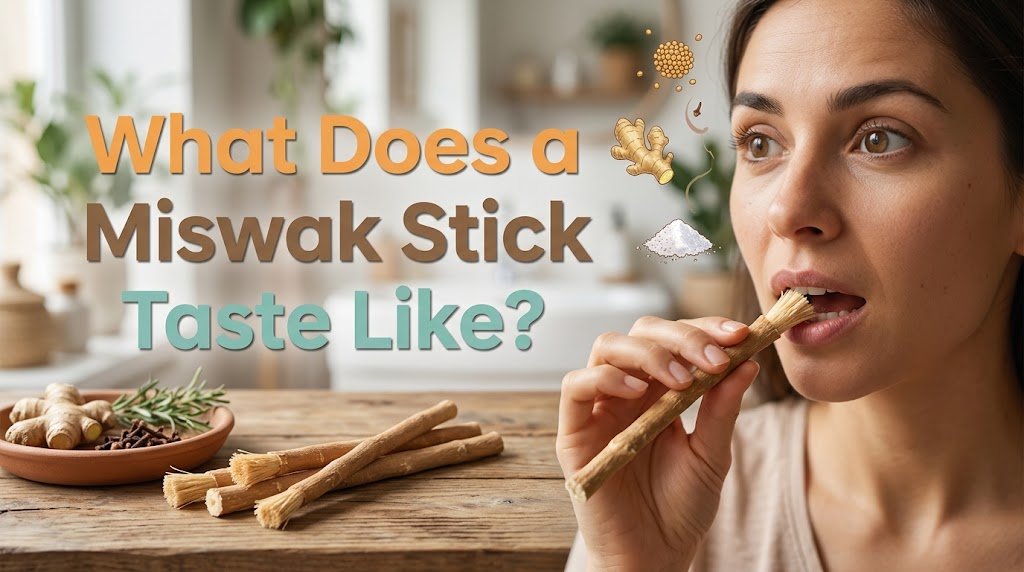
You expect it to taste like nothing. It’s a stick, after all.
Then you chew the tip. A few seconds later, a sharp, peppery tingle spreads across your tongue. Your mouth starts to water. There’s a bitter edge. Maybe a hint of salt.
That’s the moment most first timers remember. So let’s be honest about it: what the miswak stick taste is really like, where it comes from, and whether you’ll get used to it.
What Does a Miswak Stick Taste Like? The Short Answer
Peppery, a little bitter, slightly salty, and earthy.
Think watercress or mustard greens rather than wood. The heat builds as you chew, then settles into a clean, fresh feeling.
It isn’t for everyone on day one. But most people warm to it fast.
New to miswak? Start with what is a miswak stick.
Your First Time: What to Expect, Moment by Moment
When you peel the bark: an earthy, woody smell. Nothing dramatic yet.
The first few seconds of chewing: a sharp, peppery kick. This is the strongest it gets.
After a minute: your mouth waters noticeably. The heat softens. A bitter, slightly drying feeling sits on your gums.
While brushing: the flavour mellows. You might notice a faint saltiness.
Afterwards: a clean, fresh mouth. Some people notice a lingering bitterness.
A slight spicy or burning taste is normal when you chew miswak. It isn’t harmful.
What Do First Timers Really Think?
Real data helps here.
In a 2023 clinical trial, 30 young women who had always used a toothbrush switched to miswak for two weeks. Afterwards, they were asked about the taste and the experience:
| Question | Response |
|---|---|
| Rated the taste excellent | 60% |
| Rated the taste very good or good | 30% |
| Rated the taste bad or very bad | 6.67% |
| Felt fresh after using it | 43.33% |
| Noticed bitterness afterwards | 26.67% |
| Rated it excellent for bad breath | 40% |
| Willing to keep using it | 60% |
So yes, around a quarter noticed bitterness. But nine in ten rated the taste good or better. That’s a strong result for a stick of wood.
Why Does Miswak Taste Spicy?
The heat comes from benzyl isothiocyanate (BITC).
Here’s how it works. The wood stores a natural compound called a glucosinolate. When you chew and crush the plant cells, an enzyme breaks that compound down. The result is BITC.
It’s part of the same family of compounds behind the heat in mustard. That’s why the leaves of the Salvadora persica tree smell strongly of cress or mustard.
This is also why the taste is strongest at the start. You release the flavour as you chew. Once that section of fibre is worn, there’s less left to release.
The good part? Researchers identify BITC as a main antibacterial compound in miswak roots. That sharp flavour is part of what makes it work.
Why Is Miswak Bitter?
A few natural compounds share the credit:
- Essential oils. They give a mildly bitter taste that gets your saliva flowing.
- Tannins. The same group found in strong tea. They leave a dry, slightly puckering feel on your gums.
- Alkaloids. Including salvadorine, a bitter natural compound found in the wood.
- The bark. The outer layer tends to taste earthier and more bitter than the pale wood inside.
That bitterness has a job. Saliva flow helps buffer acid in your mouth. Your mouth watering is a feature, not a flaw.
Why Does Miswak Taste Salty?
Researchers have found high amounts of sodium chloride and potassium chloride in miswak roots and bark. That’s the faint salty note you might notice.
It makes sense. The tree thrives in dry, salty soils where most plants struggle.
Why Does the Taste Change From Stick to Stick?
No two miswak sticks taste exactly alike. The flavour can shift with:
- The part of the tree. Roots and branches differ in texture and in how concentrated their compounds are.
- Growing conditions. Soil and climate affect the plant’s natural compounds.
- Freshness and storage. Wood that has dried out can taste milder.
- How much you chew. More chewing releases more of the spicy compound.
- Whether you wet the tip. Dipping in water can soften that first rush.
When the Taste Means Something’s Wrong
Peppery, bitter and slightly salty are all normal. Some tastes aren’t.
| Taste | What It Usually Means | What to Do |
|---|---|---|
| Peppery, warm, slightly bitter | Normal miswak taste | Keep brushing |
| Mild, faintly woody | Tip is worn | Trim to fresh wood |
| Sour or musty | Possible mould or bacteria | Throw it away |
| Rotten or unusual | Stick has gone off | Throw it away |
If your stick smells or tastes musty, check for fuzzy or coloured patches. Our guide on what mold on miswak looks like shows you what to look for.
When It’s More Than Taste
A mild tingle is normal. These are not:
- Swelling of the lips, tongue or gums
- A burning feeling that doesn’t fade after you stop
- A rash around your mouth
- Sores that keep coming back
Stop using it and get advice from your dentist or GP. For more on who should take care, read are miswak sticks safe.
How to Ease Into the Taste
Finding it strong at first? Try these:
- Peel the bark neatly. The inner wood is milder than the bark.
- Dip the tip in water. It softens both the fibres and the first hit of flavour.
- Try rosewater. Many traditional users dip their miswak in rosewater for its pleasant scent.
- Stop chewing once bristles form. Over chewing releases more of the sharp compounds.
- Start with short sessions. A minute or two at first, then build up.
- Give it a week. The taste stays, but you’ll notice it much less with regular use.
For full prep steps, see how to use a miswak stick.
The Honest Verdict
The miswak stick taste is bold. Peppery, bitter, a little salty. Your mouth will water. You might pull a face the first time.
But it’s natural, it’s normal, and it comes from the same compounds that help miswak fight bacteria. Most first timers rate it highly. Most regulars stop noticing the bite and start missing it when it’s gone.
Want to know what that flavour does for your teeth? Read do miswak sticks work. Wondering how it stacks up against your usual brush? See miswak vs toothbrush.
Ready for your first taste?
- Curious but cautious? Start with a single miswak stick.
- Want to compare a few sticks? Try the organic natural miswak sticks pack of 3.
- Already hooked? Grab the natural miswak sticks pack of 5.
- Never want to run out? Stock up with the organic miswak sticks pack of 10.
Browse the full miswak shop UK, explore our natural miswak sticks, or visit Miswak Store UK.
Frequently Asked Questions
What does a miswak stick taste like?
Peppery, slightly bitter, a little salty and earthy. The heat is strongest in the first few seconds of chewing, then mellows.
Why does miswak taste like mustard?
Chewing releases benzyl isothiocyanate, part of the same group of compounds that gives mustard its heat. Nothing is added to the stick.
Is it normal for miswak to burn?
A mild tingle or slight burning taste is normal and harmless. Swelling, a rash or burning that doesn’t fade is not, so stop and get advice.
Why is my miswak bitter?
Natural essential oils, tannins and alkaloids give miswak its bitter edge. Mild bitterness is normal. A sour or musty taste means the stick should be thrown away.
Will I get used to the miswak taste?
Most people do within days. In one trial, 90% of first time users rated the taste good or better.
Can I make miswak taste milder?
Yes. Peel the bark neatly, dip the tip in water or rosewater, and stop chewing once bristles form.
Sources: Abdellatif et al., 2024 (PMC11545077). Haque and Alsareii, Saudi Medical Journal, 2015 (PMC4436748). Halawany, The Saudi Dental Journal, 2012. Simmons et al., “The Miswak Comeback,” Dimensions of Dental Hygiene, 2026.