
Are Miswak Sticks Safe? Risks, Overuse and Who Should Be Careful

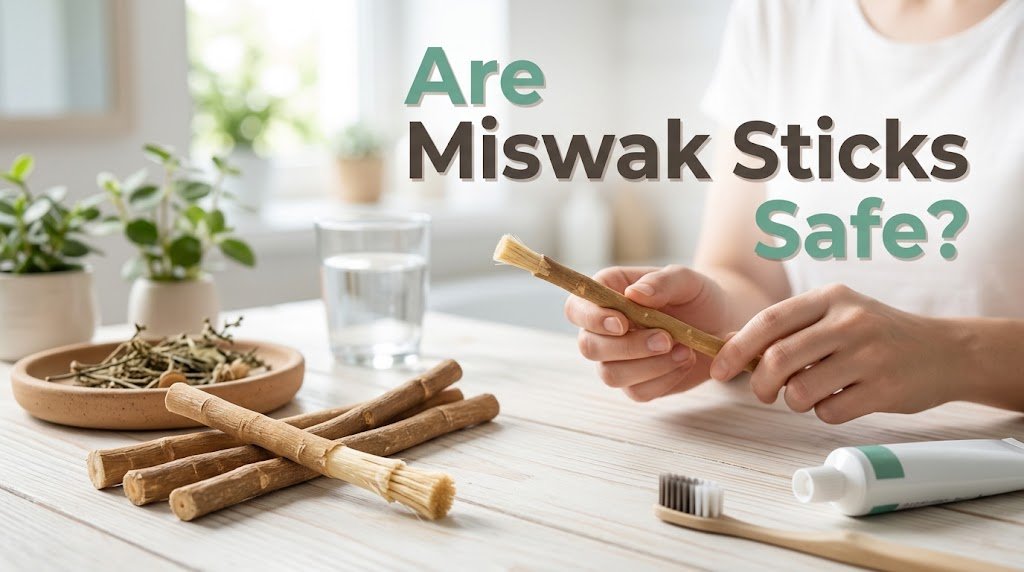
Millions of people use a miswak every day. It’s been cleaning teeth for thousands of years. The World Health Organization has recommended chewing sticks for oral hygiene where their use is customary.
So it must be completely safe, right?
Mostly, yes. But “natural” doesn’t mean “risk free.” A toothbrush used badly can damage your gums. A miswak can too.
Here’s an honest look at the risks, what overuse really looks like, and who should take extra care.
Are Miswak Sticks Safe? The Short Answer
Yes, for most people, when used gently and correctly.
The research supports miswak as an effective oral hygiene tool. It cleans plaque, fights bacteria and supports gum health in many studies.
The risks come mainly from how it’s used. Too much pressure. Too much scrubbing. No proper technique. Those are the things that cause harm.
New to miswak? Start with what is a miswak stick.
Are Miswak Sticks Bad for Your Teeth?
Not when used properly. But misuse can cause real damage. Here’s what the studies flag.
Gum Recession
This is the most reported risk.
- Several studies found miswak users had more sites of gum recession than toothbrush users, and more severe recession.
- One study found miswak users had good oral hygiene and healthy gum scores, yet still showed higher recession.
- Researchers link this to high frequency use (such as five times a day) combined with no proper instruction.
A 2025 systematic review added balance. It found excessive or improper use may contribute to recession, but said the evidence isn’t strong enough to prove miswak directly causes it.
Tooth Wear
A study of young adults in Saudi Arabia linked miswak use with increased wear on the biting surfaces of teeth. Other factors in the same study included teeth grinding, nail biting and high fruit juice intake.
A UK Case Worth Knowing
Dentists at King’s College London Dental Institute reported an unusual case. A 52 year old woman came in to replace a lost front tooth. They found severe wear around the necks of her teeth, on both the inner and outer surfaces. In places, it went deep into the dentine. She also had widespread gum recession.
The cause? She’d been using a miswak, scrubbing hard, instead of a toothbrush, with no toothpaste. Her dentists treated her and taught her a gentler brushing technique.
It’s a rare, extreme case. But it shows what heavy, uninstructed scrubbing can do over years.
Gum Irritation in Beginners
In a 2023 trial, women who switched from a toothbrush to miswak for two weeks saw their gum scores rise. Researchers believe the beginners used it too aggressively.
The pattern is clear. Miswak itself isn’t the problem. Rough, untrained use is.
What Overuse Looks Like
Watch for these warning signs:
- Gums that look like they’re pulling back from your teeth
- Teeth that look longer than they used to
- New sensitivity to hot or cold
- Notches or worn grooves near the gumline
- Red, scuffed or sore gums after brushing
- Bleeding that gets worse, not better
If you notice any of these, ease off the pressure and see your dentist.
How to Use Miswak Safely
Most risks are avoidable. Follow these rules:
- Use light pressure. Let the fibres do the work.
- Brush away from the gums. Never saw back and forth across the gumline.
- Keep bristles soft. Chew the tip until it feels like a soft bristled toothbrush.
- Trim hard or splintered tips. Rough fibres scratch gums.
- Don’t scrub one spot. Move slowly around your whole mouth.
- Learn the technique. The best results in research came after proper instruction.
- Consider pairing it with a toothbrush. Combined use gave the best results in several studies.
Full step by step guidance is in how to use a miswak stick.
Can You Swallow Miswak?
The sap and saliva, yes. The bark and fibres, no.
When you chew and brush with a miswak, it releases natural juices into your saliva. Swallowing that small amount has always been a normal part of using miswak.
What you shouldn’t swallow:
- Bark. Peel or chew it off, then spit it out.
- Loose fibres or splinters. Spit them out as you go.
- Trimmed tips. Throw them away.
Wood fibres aren’t food. Small pieces can irritate your throat or pose a choking risk, especially for children.
Can You Eat Miswak?
No. A miswak stick is a cleaning tool, not food.
It’s wood. You chew the tip to soften it into bristles, but you don’t eat it.
What about the tree itself? The small berries of Salvadora persica are edible, fresh or dried. But that’s the fruit, not the stick you clean your teeth with.
On extracts, the research is limited and mostly animal studies:
- One study found miswak extracts were not toxic to mice at high doses.
- Another found minor effects on the reproductive systems of mice given high doses of extract directly.
None of this reflects normal use in your mouth. But it’s a good reason not to treat miswak as a food or supplement.
What the Research Doesn’t Know Yet
Science on miswak is strong for plaque and gums. Some safety questions are still open:
- Long term studies are limited. Researchers continue to call for longer clinical trials.
- Freshly cut versus older plant material. One early lab study found freshly cut miswak had no toxic effect on oral tissue cells, but reported potentially harmful components in plant material used after 24 hours. This hasn’t been confirmed in people.
- Quality varies. Potency changes with the part of the tree used and where it was grown.
Who Should Be Careful With Miswak?
Most people can use miswak safely. These groups should take extra care or speak to a dentist first.
People with gum recession. Recession can’t be reversed. Use very light pressure, or ask your dentist whether miswak suits you.
People with worn teeth or sensitivity. Abrasive scrubbing could make it worse.
People who grind their teeth. Grinding and miswak use were both linked with tooth wear in the same study.
People with heavy plaque or gum disease. A toothbrush was more effective for heavy plaque in research. Active gum disease needs a dentist, not just a new brush.
Beginners switching completely. The 2023 trial suggests new users are more likely to brush too hard. Start alongside your toothbrush.
Children. Supervise closely. Make sure they spit out bark and fibres, and never let them run around with a stick in their mouth.
Anyone pregnant or trying to conceive. Normal brushing use is different from swallowing extracts. Still, given the animal study findings, check with your GP or midwife if you have concerns.
Anyone with irritation or a reaction. If your mouth feels sore, burns or swells, stop and get advice.
Should You See a Dentist?
Yes, whatever you brush with.
Tell your dentist you use a miswak. The King’s College case shows how easily it can be missed. A dentist can check your technique, spot early recession and tell you whether miswak suits your mouth.
The Verdict
Are miswak sticks safe? For most people, yes.
The real risk isn’t the stick. It’s heavy pressure, aggressive scrubbing and no technique. Use it gently, brush away from the gums, keep the tip soft, and see your dentist regularly.
Want the full evidence on benefits? Read do miswak sticks work. Deciding how it fits your routine? See miswak vs toothbrush. Keeping your stick hygienic? Learn how long does a miswak stick last and what mold on miswak looks like.
Ready to start the right way?
- New to miswak? Try a single miswak stick.
- Want spares to keep tips fresh? The organic natural miswak sticks pack of 3 has you covered.
- Using it daily? Choose the natural miswak sticks pack of 5.
- Stocking up? Go for the organic miswak sticks pack of 10.
Browse the full miswak shop UK, explore our natural miswak sticks, or visit Miswak Store UK.
Frequently Asked Questions
Are miswak sticks safe to use every day?
Yes, for most people, when used gently. Daily use is how most studies tested it. Avoid heavy pressure and aggressive scrubbing.
Are miswak sticks bad for your teeth?
Not when used properly. Rough, frequent or untrained use has been linked to gum recession and tooth wear.
Can you swallow miswak?
You can swallow the small amount of natural sap released into your saliva. Spit out the bark, loose fibres and any splinters.
Can you eat miswak?
No. A miswak stick is a wooden cleaning tool, not food. The berries of the tree are edible, but the stick is not.
Can miswak damage your gums?
It can if you press too hard or scrub across the gumline. Brush gently and away from the gums.
Who should not use miswak?
People with gum recession, worn teeth, heavy plaque or active gum disease should check with a dentist first. Children need supervision.
Is miswak safe for children?
It can be, with close supervision. Make sure they use gentle pressure and spit out bark and fibres.
Sources: Haque and Alsareii, Saudi Medical Journal, 2015 (PMC4436748). Dahiya et al., Journal of Natural Science, Biology and Medicine, 2012 (PMC3545237). Halawany, The Saudi Dental Journal, 2012. Karia and Kelleher, “Bizarre tooth surface loss and the miswak stick,” Dental Update, 2014. Abdellatif et al., 2024 (PMC11545077). Simmons et al., “The Miswak Comeback,” Dimensions of Dental Hygiene, 2026.